





India
17,662
158




1 Sum of total GHG emissions saved by suppliers participating in Aii’s Supplier Journey in each year from 2018 until the end of 2025 multiplied by the respective useful life factor. In 2024, we updated our emissions and conversion factors, including historic data — read more about our data and calculation methods in our Methodology/Calculations section.
2 Sum of total GHG emissions saved by producers participating in Aii’s Supplier Journey in each year from 2018 until the end of 2025 multiplied by the respective useful life factor (see How We Report section)
3 Sum of total actual GHG emissions saved by producers participating in Aii’s Supplier Journey in each year from 2018 until the end of 2025.
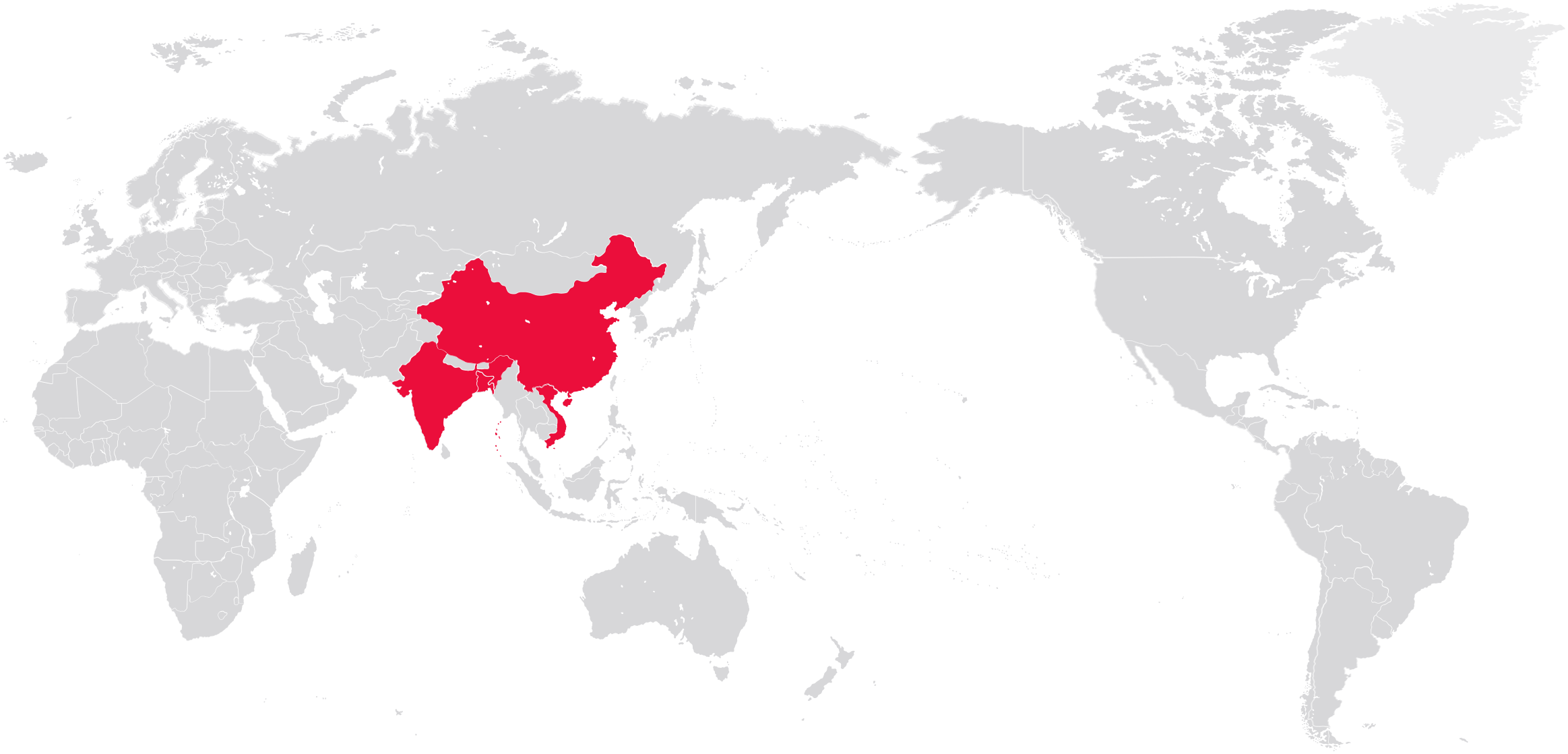
17,662
158
484
146
199
558

Total No. of
Active Solutions1
473 facilities & 17,662 farms

Total No. of
Completed Solutions2
297 facilities

Total No. of
Brands3:
48
Total No. of
Regions4:
48
Average actual cost per tCO₂e:
US $17.28
Average actual facility investment cost per tCO₂e:
US $13.27
Average actual Aii cost per tCO₂e:
US $4.01
Average actual cost per tCO₂e includes Aii’s total spending (i.e., all Aii G&A and program-related expenses) and supplier capital investments to implement actions between 2018-2025.
1Facility is actively engaged in the program, the kick-off session has occurred, and the facility is now implementing the program.
2Facility completed all activities within a program and a certificate was issued.
3Total number of brands Aii was working with in 2025 (active and completed programs). Brands include organizations that contributed funding to Aii in 2025.
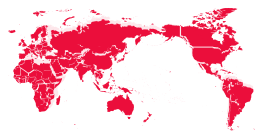
4All countries/regions Aii offered programs in 2025. A region has at least one producer that has started program work with Aii.
Level 1 - Assured
Total actual GHG emission savings in tCO₂e
191,846
Level 2 - Not Assured
Total actual GHG emission savings in tCO₂e
79,777
Total actual GHG emission savings in tCO₂e: 271,623
Average actual factory GHG emission savings in tCO₂e: 3,395
Average % of GHG emission savings: 7.81%
 x 63,357
Total GHG emissions savings equal to 63,357 cars removed from the roads in 2025.
Total GHG emissions savings equal to 63,357 gasoline-powered passenger vehicles driven for one year. Source: United States Environmental Protection Agency
Level 1 - Assured
Total actual water savings in m³
3,385,759
Level 2 - Not Assured
Total actual water savings in m³
763,238
Total actual water savings in m³: 4,148,997
Average actual factory water savings in m³: 56,836
Average % of water savings: 7.53%
 x 1,660
Total water savings equal to almost 1,660 Olympic-sized swimming pools not filled in 2025.
One Olympic-sized swimming pool contains 660,430 gallons of water. Source: FINA Facilities Rules 2015-2017, Wayback Machine (archive.org)
Level 1 - Assured
Total actual energy savings in GJ
2,002,463
Level 2 - Not Assured
Total actual energy savings in GJ
688,570
Total actual energy savings in GJ: 2,691,033
Average actual factory energy savings in GJ: 33,638
Average % of energy savings: 6.36%
 x 15,904,450
Total energy savings equal to 15,904,450 washing machines not used in 2025.
Washing machines not used are calculated using a 17.6 lbs capacity Miele WWD020 WCS machine and assuming it is used for 100 cycles per year. EU energy class: A. Source: Washing Machines and Washer-Dryers (europa.eu)
In 2025, we continued to implement a supplier-centric, data-driven framework to support decarbonization across the apparel value chain. Through three supplier pathways: existing partners, priority suppliers with high reduction potential, and brand-nominated suppliers, we adopted a more flexible, solution-oriented approach to engagement. This is supported by a structured implementation journey, from baseline assessment and action planning to on-the-ground execution and continuous performance monitoring.
Across its programs, Aii advanced key initiatives to drive impact at scale. High Impact Projects (HIPs) were defined and initiated in China and Vietnam to support deep decarbonization in wet processing. Regional and sector-focused efforts expanded, including the Apparel and Textile Transformation Initiative and increased engagement in Italy’s luxury supply chain. In parallel, pilot programs with Made2Flow and RETI in Vietnam strengthened data infrastructure and renewable energy pathways.
Looking ahead to 2026, Aii will continue scaling this integrated model, expanding platform deployment, advancing supplier implementation, and accelerating high-impact decarbonization across key regions and production tiers.
The Climate Solutions Portfolio (CSP) is the industry’s registry for vetted climate solutions, designed to accelerate the adoption and scale of technologies that deliver measurable CO₂e reductions. Through solution vetting, grant funding, and technical assistance, CSP supports both emerging and mature solutions and connects them with brands and suppliers to enable real-world deployment.
In 2025, we advanced its clean heat strategy, focusing on electrification and thermal load reduction as key pathways for decarbonizing textile manufacturing. Through coordinated workstreams—including renewable energy deployment, heat pump feasibility and implementation, and efficiency-driven load reduction—CSP supported facilities in moving from assessment to execution. Pilot grants for steam-generating heat pumps and other technologies generated early evidence to support broader adoption, and six new solutions were added to the registry.
Looking ahead to 2026, CSP will transition to a supplier-led, electrification-focused approach to accelerate impact and scale.
Aii’s grant programs provide targeted funding to accelerate the development and deployment of low-carbon solutions across the apparel value chain. Through the Climate Solutions Portfolio (CSP) Grants, Supplier Electrification Grants, and the newly launched Deployment Gap Grant (DGG), Aii supports both early-stage innovation and the implementation of proven technologies that face financial or operational barriers.
In 2025, CSP grants supported a cohort of three grantees addressing thermal energy and material innovation, while the Supplier Electrification Grant enabled the installation of the first steam-generating heat pump in Vietnam’s textile sector, demonstrating the viability of fully electrified thermal systems. In parallel, Aii launched the DGG to bridge the gap between short payback expectations and the longer return periods of low-carbon technologies, piloting projects in India focused on renewable thermal energy and electrification readiness.
In 2026, Aii will scale these funding mechanisms to accelerate supplier adoption of electrification and energy-efficient technologies.
Aii’s Energy and Carbon Benchmark provides tailored energy and emissions intensity reference values that facilities can use to assess performance at the manufacturing process level. Developed with technical experts and guided by a multi-stakeholder Technical Review Committee, it delivers benchmarks across textile and garment production tiers and process configurations, distinguishing between single-tier and vertical facilities operating multiple processes on site.
In 2025, Aii advanced the Benchmark through technical review, public consultation, and pilot testing. More than 60 submissions were received through surveys and direct feedback during the consultation period, while approximately 400 facilities participated in pilot phases to validate the methodology and refine results.
Version 1.0 will be released in early 2026, transitioning the Benchmark from testing to sector-wide deployment.
In 2025, Aii convened key stakeholders across regions to accelerate alignment and action on decarbonization. This included a supplier-focused activation event in India, where partners co-developed the Deployment Gap Grant and advanced electrification feasibility studies, as well as participation in global platforms such as New York Climate Week, Cascale’s Annual Meeting, and industry forums across the U.S., Europe, and Asia. Aii also hosted targeted convenings, including the Clean by Design Award Ceremony in China and sector-focused events such as Lineapelle in Italy, bringing together brands, suppliers, and solution providers to address implementation challenges and opportunities.
Aii strengthened its thought leadership through the publication of sector roadmaps and country-specific analyses, including the Low-Carbon Thermal Energy Roadmap and decarbonization and finance landscape reports for China and Bangladesh. In parallel, Aii expanded its role in multi-stakeholder initiatives and industry collaborations—such as the Apparel Alliance Working Group and the Apparel and Textile Transformation Initiative—helping align data frameworks, tools, and implementation pathways across the value chain.
Together, these efforts reinforced Aii’s role as a convener and technical leader, driving practical, coordinated action to support industry-wide decarbonization.
Aii’s Sustainable Finance function is designed to unlock decarbonization by addressing the financial barriers that prevent suppliers from investing in low-carbon solutions, including access to capital, risk allocation, and uncertain payback periods.
In 2025, Aii focused on translating decarbonization plans into investable projects. Key milestones included launching the Deployment Gap Grant to address long payback barriers for thermal and electrification technologies, expanding the Future Supplier Initiative into India to advance collective financing models, and developing The Cost of Inaction report with Accenture to highlight the financial risks of delayed action. Aii also strengthened engagement with financial institutions, supported the development of a global debt fund, expanded supplier financial readiness through training, and developed region-specific financing solutions.
In 2026, Aii will continue scaling capital mobilization and strengthening financing pathways to accelerate investment in high-impact decarbonization projects across the value chain.
In 2025, we continued to implement a supplier-centric, data-driven framework to support decarbonization across the apparel value chain. Through three supplier pathways: existing partners, priority suppliers with high reduction potential, and brand-nominated suppliers, we adopted a more flexible, solution-oriented approach to engagement. This is supported by a structured implementation journey, from baseline assessment and action planning to on-the-ground execution and continuous performance monitoring.
Across its programs, Aii advanced key initiatives to drive impact at scale. High Impact Projects (HIPs) were defined and initiated in China and Vietnam to support deep decarbonization in wet processing. Regional and sector-focused efforts expanded, including the Apparel and Textile Transformation Initiative and increased engagement in Italy’s luxury supply chain. In parallel, pilot programs with Made2Flow and RETI in Vietnam strengthened data infrastructure and renewable energy pathways.
Looking ahead to 2026, Aii will continue scaling this integrated model, expanding platform deployment, advancing supplier implementation, and accelerating high-impact decarbonization across key regions and production tiers.
The Climate Solutions Portfolio (CSP) is the industry’s registry for vetted climate solutions, designed to accelerate the adoption and scale of technologies that deliver measurable CO₂e reductions. Through solution vetting, grant funding, and technical assistance, CSP supports both emerging and mature solutions and connects them with brands and suppliers to enable real-world deployment.
In 2025, we advanced its clean heat strategy, focusing on electrification and thermal load reduction as key pathways for decarbonizing textile manufacturing. Through coordinated workstreams—including renewable energy deployment, heat pump feasibility and implementation, and efficiency-driven load reduction—CSP supported facilities in moving from assessment to execution. Pilot grants for steam-generating heat pumps and other technologies generated early evidence to support broader adoption, and six new solutions were added to the registry.
Looking ahead to 2026, CSP will transition to a supplier-led, electrification-focused approach to accelerate impact and scale.
Aii’s grant programs provide targeted funding to accelerate the development and deployment of low-carbon solutions across the apparel value chain. Through the Climate Solutions Portfolio (CSP) Grants, Supplier Electrification Grants, and the newly launched Deployment Gap Grant (DGG), Aii supports both early-stage innovation and the implementation of proven technologies that face financial or operational barriers.
In 2025, CSP grants supported a cohort of three grantees addressing thermal energy and material innovation, while the Supplier Electrification Grant enabled the installation of the first steam-generating heat pump in Vietnam’s textile sector, demonstrating the viability of fully electrified thermal systems. In parallel, Aii launched the DGG to bridge the gap between short payback expectations and the longer return periods of low-carbon technologies, piloting projects in India focused on renewable thermal energy and electrification readiness.
In 2026, Aii will scale these funding mechanisms to accelerate supplier adoption of electrification and energy-efficient technologies.
Aii’s Energy and Carbon Benchmark provides tailored energy and emissions intensity reference values that facilities can use to assess performance at the manufacturing process level. Developed with technical experts and guided by a multi-stakeholder Technical Review Committee, it delivers benchmarks across textile and garment production tiers and process configurations, distinguishing between single-tier and vertical facilities operating multiple processes on site.
In 2025, Aii advanced the Benchmark through technical review, public consultation, and pilot testing. More than 60 submissions were received through surveys and direct feedback during the consultation period, while approximately 400 facilities participated in pilot phases to validate the methodology and refine results.
Version 1.0 will be released in early 2026, transitioning the Benchmark from testing to sector-wide deployment.
In 2025, Aii convened key stakeholders across regions to accelerate alignment and action on decarbonization. This included a supplier-focused activation event in India, where partners co-developed the Deployment Gap Grant and advanced electrification feasibility studies, as well as participation in global platforms such as New York Climate Week, Cascale’s Annual Meeting, and industry forums across the U.S., Europe, and Asia. Aii also hosted targeted convenings, including the Clean by Design Award Ceremony in China and sector-focused events such as Lineapelle in Italy, bringing together brands, suppliers, and solution providers to address implementation challenges and opportunities.
Aii strengthened its thought leadership through the publication of sector roadmaps and country-specific analyses, including the Low-Carbon Thermal Energy Roadmap and decarbonization and finance landscape reports for China and Bangladesh. In parallel, Aii expanded its role in multi-stakeholder initiatives and industry collaborations—such as the Apparel Alliance Working Group and the Apparel and Textile Transformation Initiative—helping align data frameworks, tools, and implementation pathways across the value chain.
Together, these efforts reinforced Aii’s role as a convener and technical leader, driving practical, coordinated action to support industry-wide decarbonization.
Aii’s Sustainable Finance function is designed to unlock decarbonization by addressing the financial barriers that prevent suppliers from investing in low-carbon solutions, including access to capital, risk allocation, and uncertain payback periods.
In 2025, Aii focused on translating decarbonization plans into investable projects. Key milestones included launching the Deployment Gap Grant to address long payback barriers for thermal and electrification technologies, expanding the Future Supplier Initiative into India to advance collective financing models, and developing The Cost of Inaction report with Accenture to highlight the financial risks of delayed action. Aii also strengthened engagement with financial institutions, supported the development of a global debt fund, expanded supplier financial readiness through training, and developed region-specific financing solutions.
In 2026, Aii will continue scaling capital mobilization and strengthening financing pathways to accelerate investment in high-impact decarbonization projects across the value chain.

2025, the midpoint of our Roadmap to 2030, marked a year of structural progress. Rather than simply expanding programs, we strengthened the systems required to drive measurable decarbonization at scale. We advanced several foundational pillars: The Carbon and Energy Benchmark established a standardized framework for facilities to assess performance against model processes and industry peers, reinforcing measurement and accountability.
Over the past several years, foundational efficiency programs have delivered meaningful progress. However, the scale of emissions reductions required by 2030 demands a more concentrated, high-impact approach rather than incremental gains. In response to this urgency, we are refining our capital allocation strategy to prioritize capital-intensive, technologically advanced interventions that are capable of delivering the most significant carbon reductions — particularly in wet processing.

Achieving our ambition of 100 Mt CO₂e by 2030 will require sustained investment, capital mobilization beyond grant funding, and the scaling of HIPs across priority regions. To assess this pathway, we developed an Impact Forecasting Model that estimates cumulative GHG reductions based on projected facility completions, capital allocation strategies, and historical program performance.
2025, the midpoint of our Roadmap to 2030, marked a year of structural progress. Rather than simply expanding programs, we strengthened the systems required to drive measurable decarbonization at scale.
Over the past several years, foundational efficiency programs have delivered meaningful progress. However, the scale of emissions reductions required by 2030 demands a more concentrated, high-impact approach rather than incremental gains.
Achieving our ambition of 100 Mt CO₂e by 2030 will require sustained investment, capital mobilization beyond grant funding, and the scaling of HIPs across priority regions.


